Aerotrack / SaaS Platform + AI-enabled Logistics System
Simplifying global shipping for small businesses.
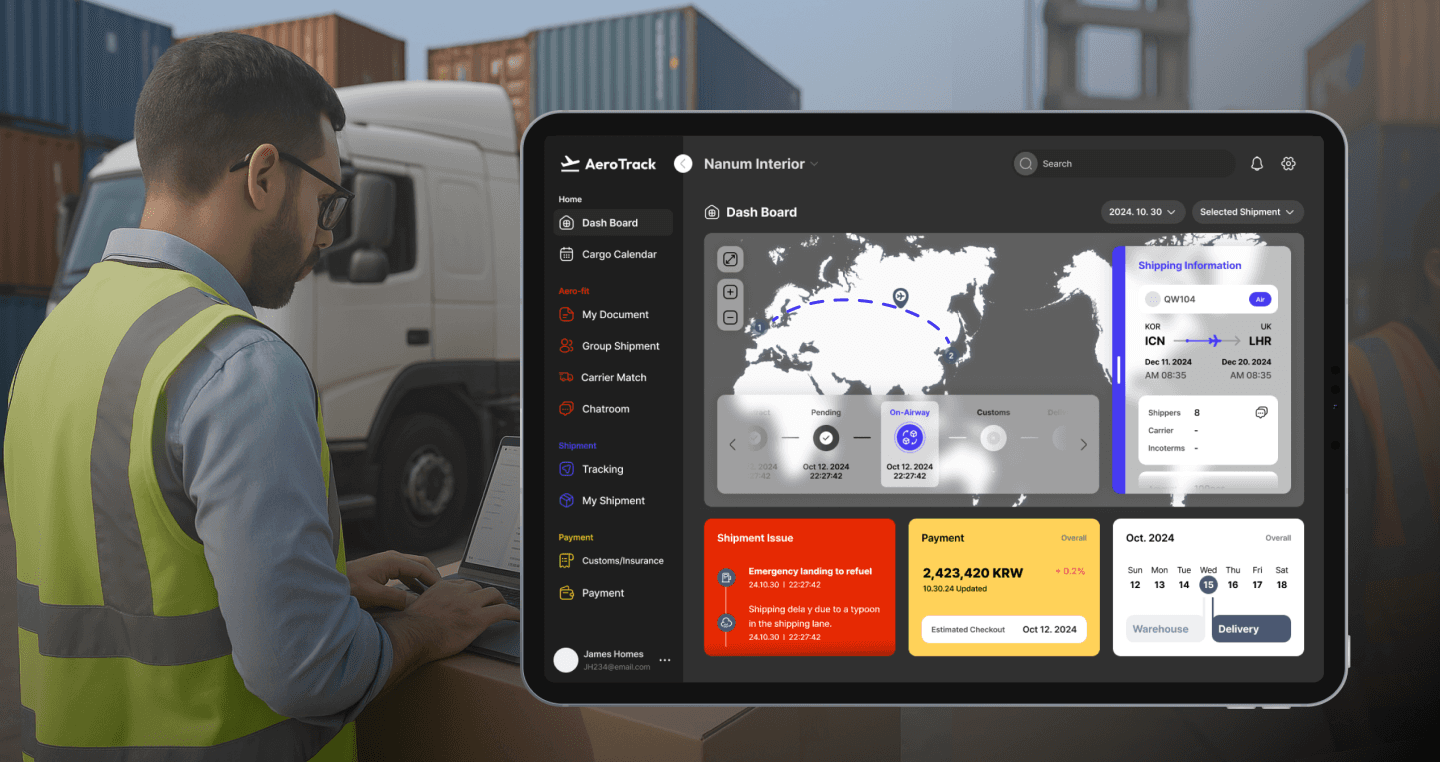
AeroTrack is a logistics management system for small import-export businesses. It displays complex international shipping processes in an easy-to-understand way and allows simple management of required documentation.
Role
Product Designer
Duration
Sep – Nov 2024
Skills
Market Research
User Research
Service Design
Information Architecture
UX/UI
Overview
What if managing global shipments felt effortless?
Small importers and exporters struggle with fragmented communication, inconsistent documents, and limited visibility across logistics partners.
I designed AeroTrack to bring clarity to this chaos—centralizing information, automating documentation, and enabling real-time collaboration.
The problem
No one is building for small shippers.
Logistics tools built for enterprise, not for you.
In the complex world of air transportation and small-scale freight shipping, numerous stakeholders and intricate documents are constantly exchanged. Small importers and exporters face delays, unexpected costs, and repeated data entry—with no tools designed for their scale.
I mapped the ecosystem and found 9 distinct stages with 10 information exchanges—most of them redundant.
WHAT'S MISSING
pROBLEM STATEMENT
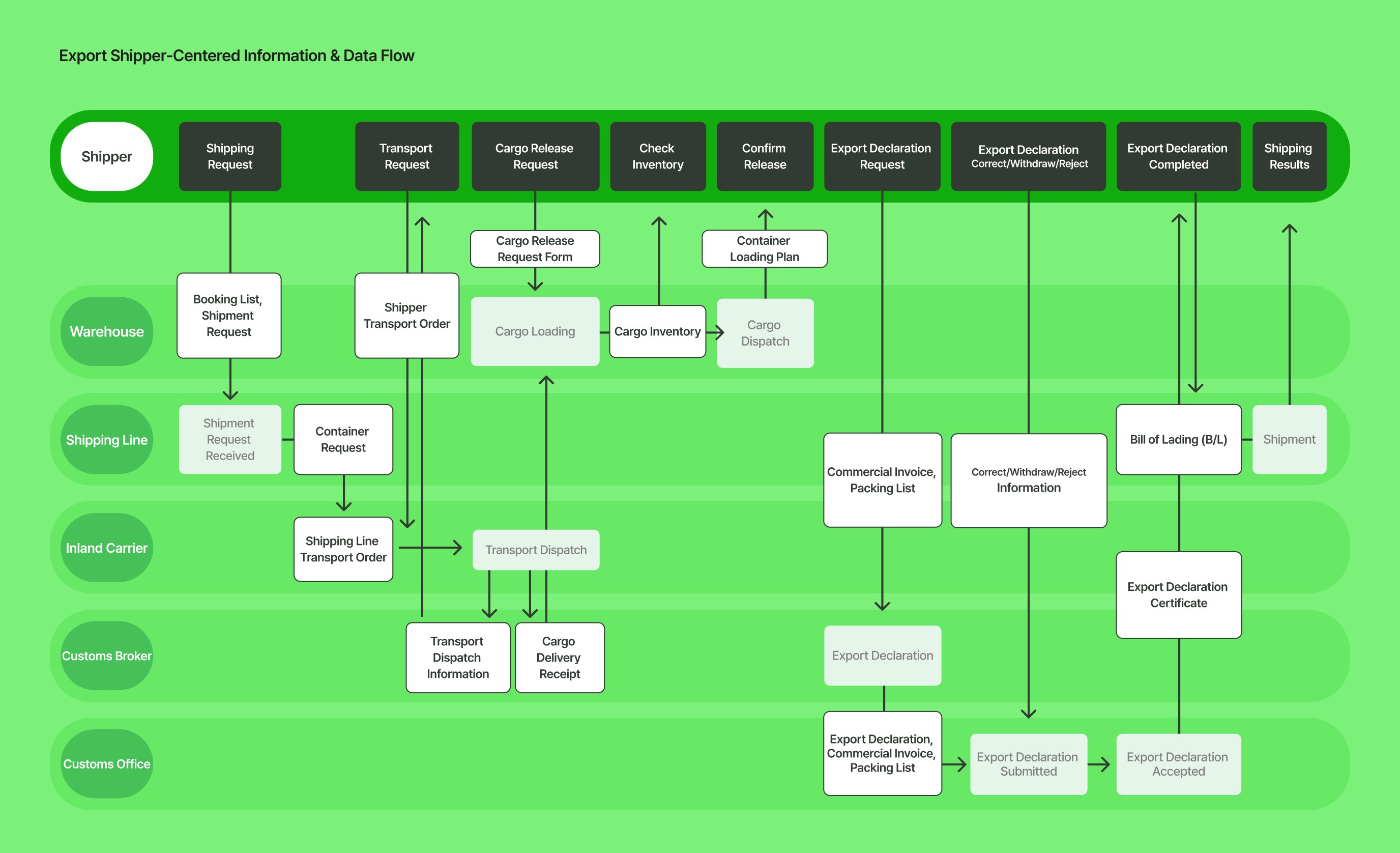
Information flow (Before)
Solution
Introducing Aerotrack
An AI-enabled logistics platform that turns complex shipping into a streamlined, visual experience.
AeroTrack centralizes document creation, real-time tracking, and stakeholder communication—helping small shippers save time, reduce errors, and cut costs.
Core flows
01 DASHBOARD
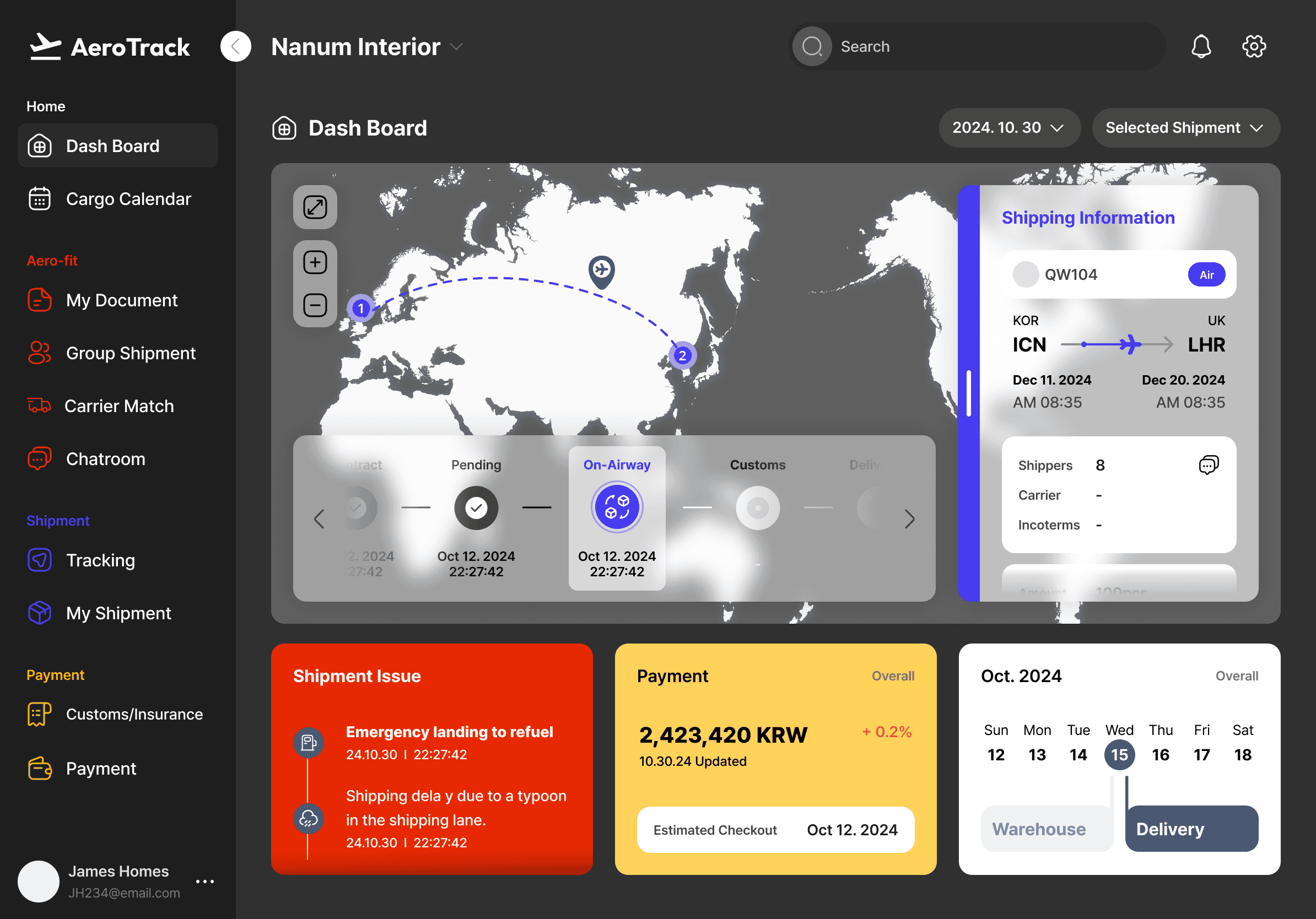
See everything at a glance.
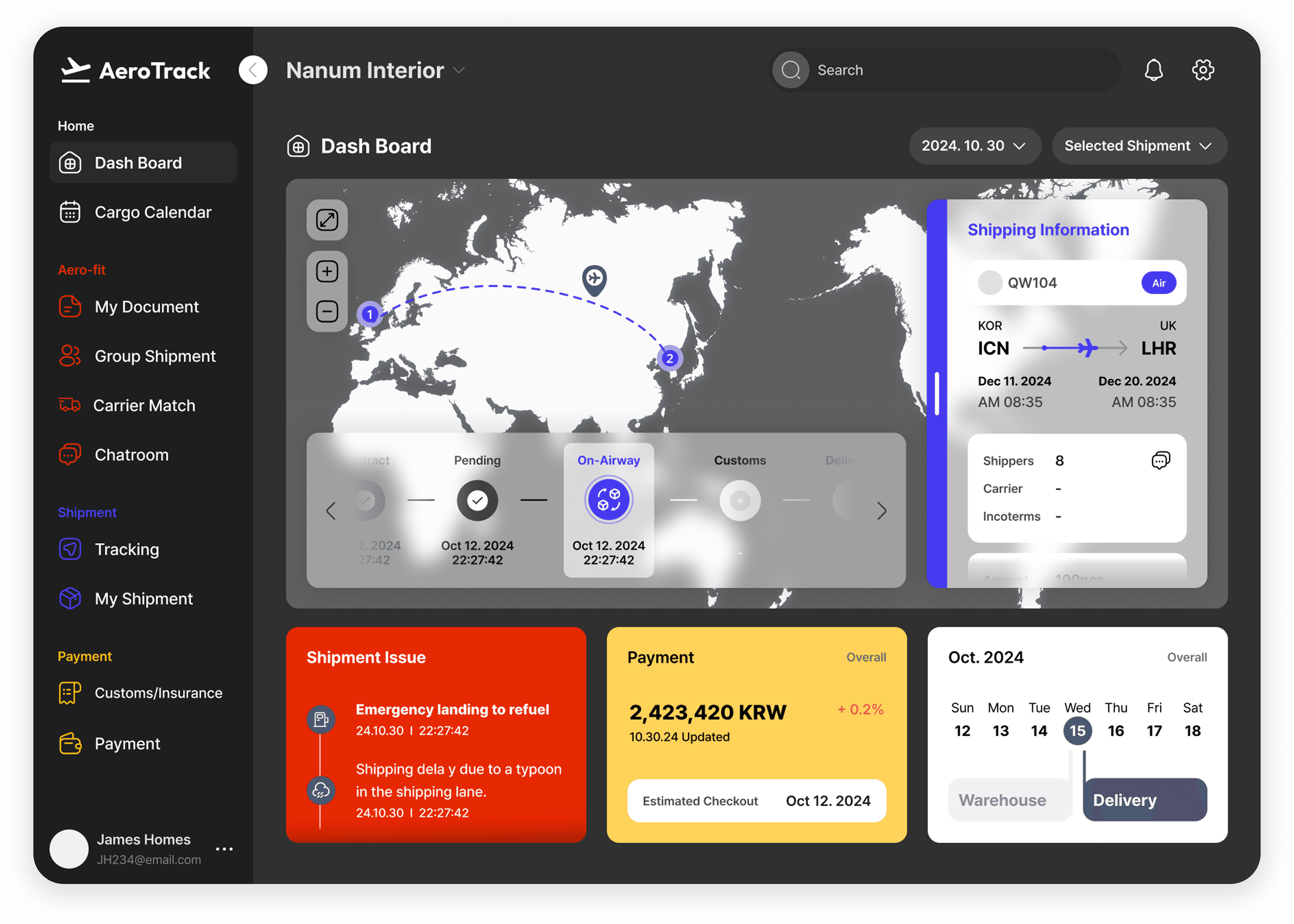
Map-based interface with real-time route visualization, shipment issues, payment status, and delivery calendar—all in one view.
02 DOCUMENT CREATION
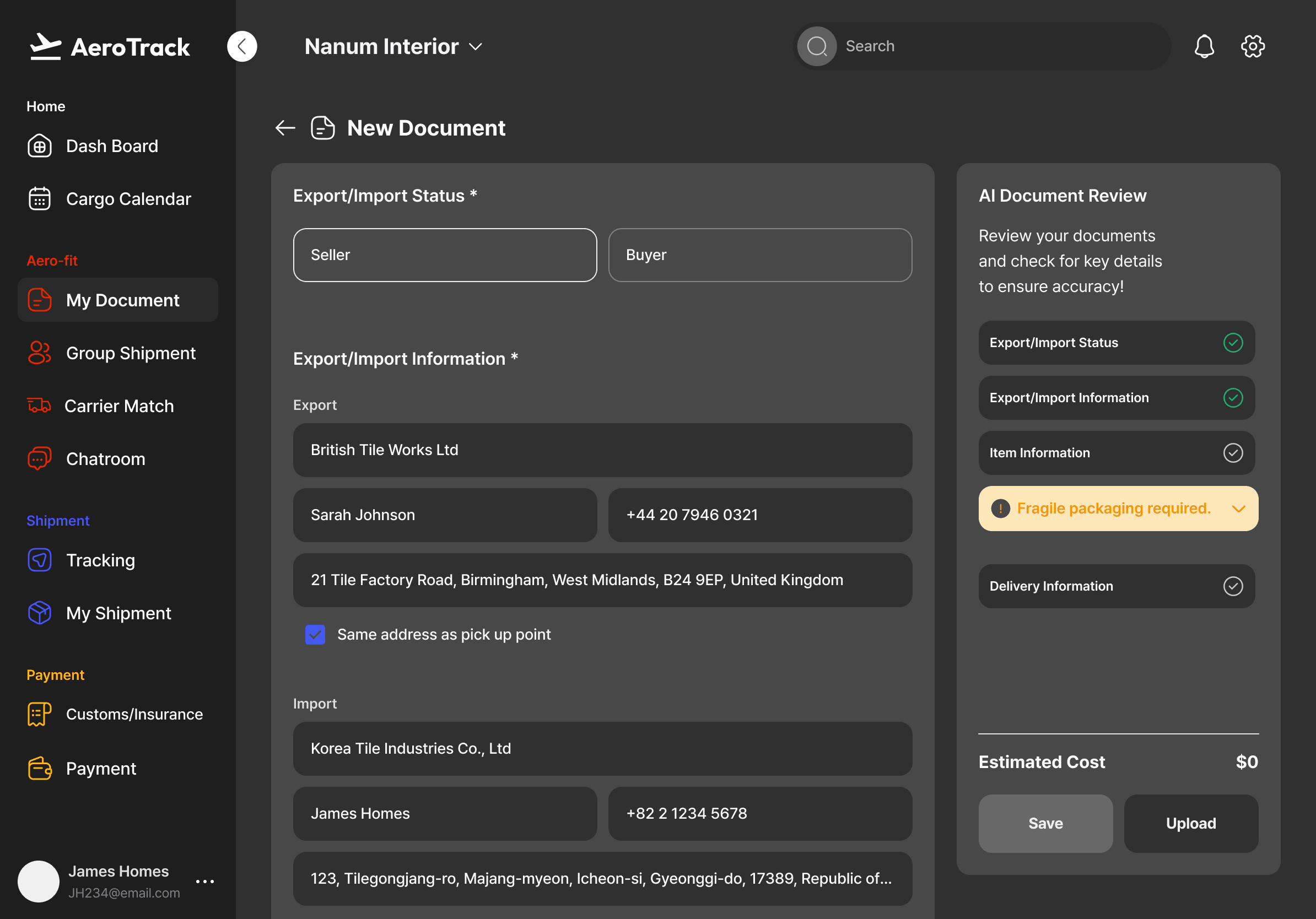
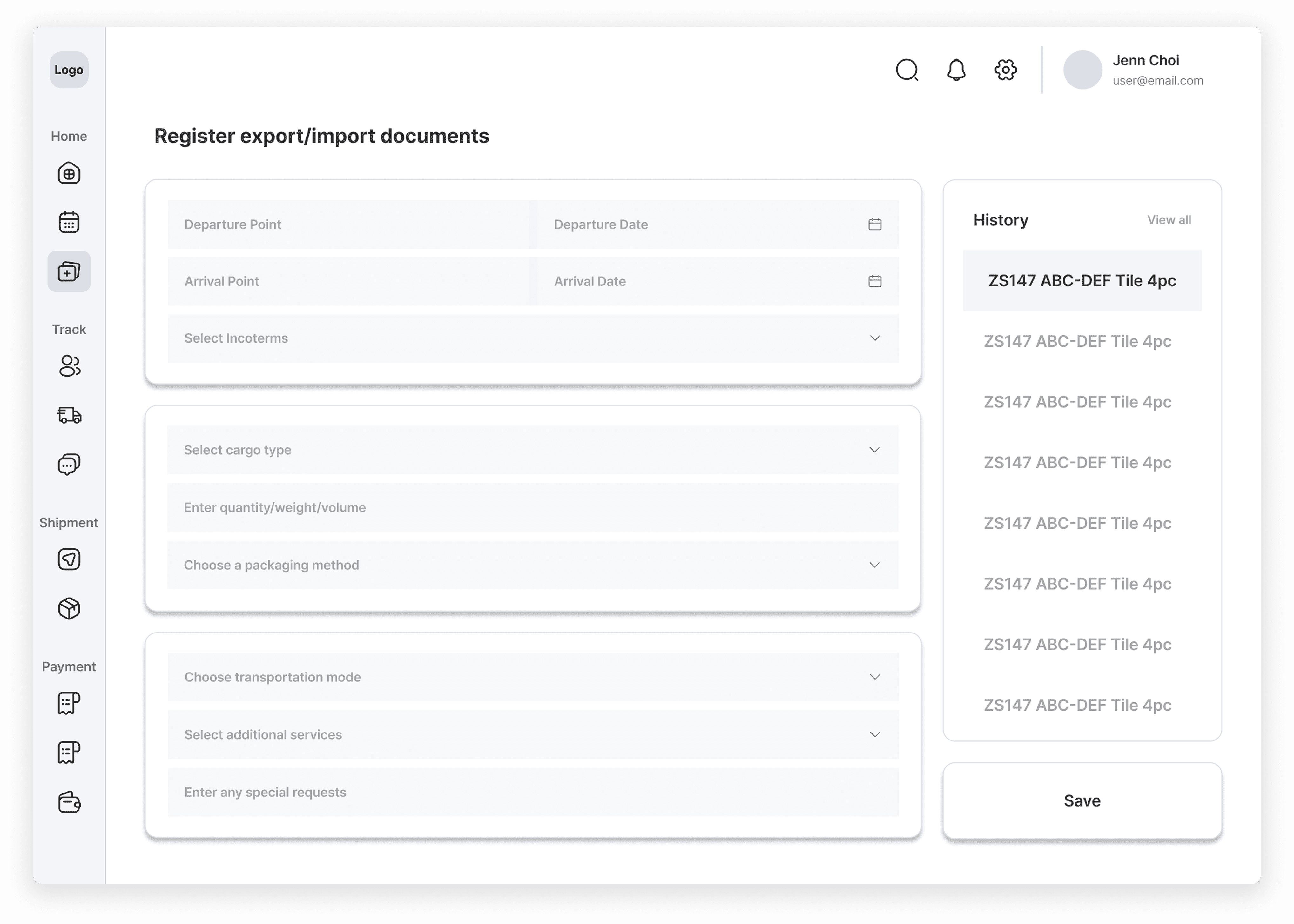
Error-free documentation, automated.
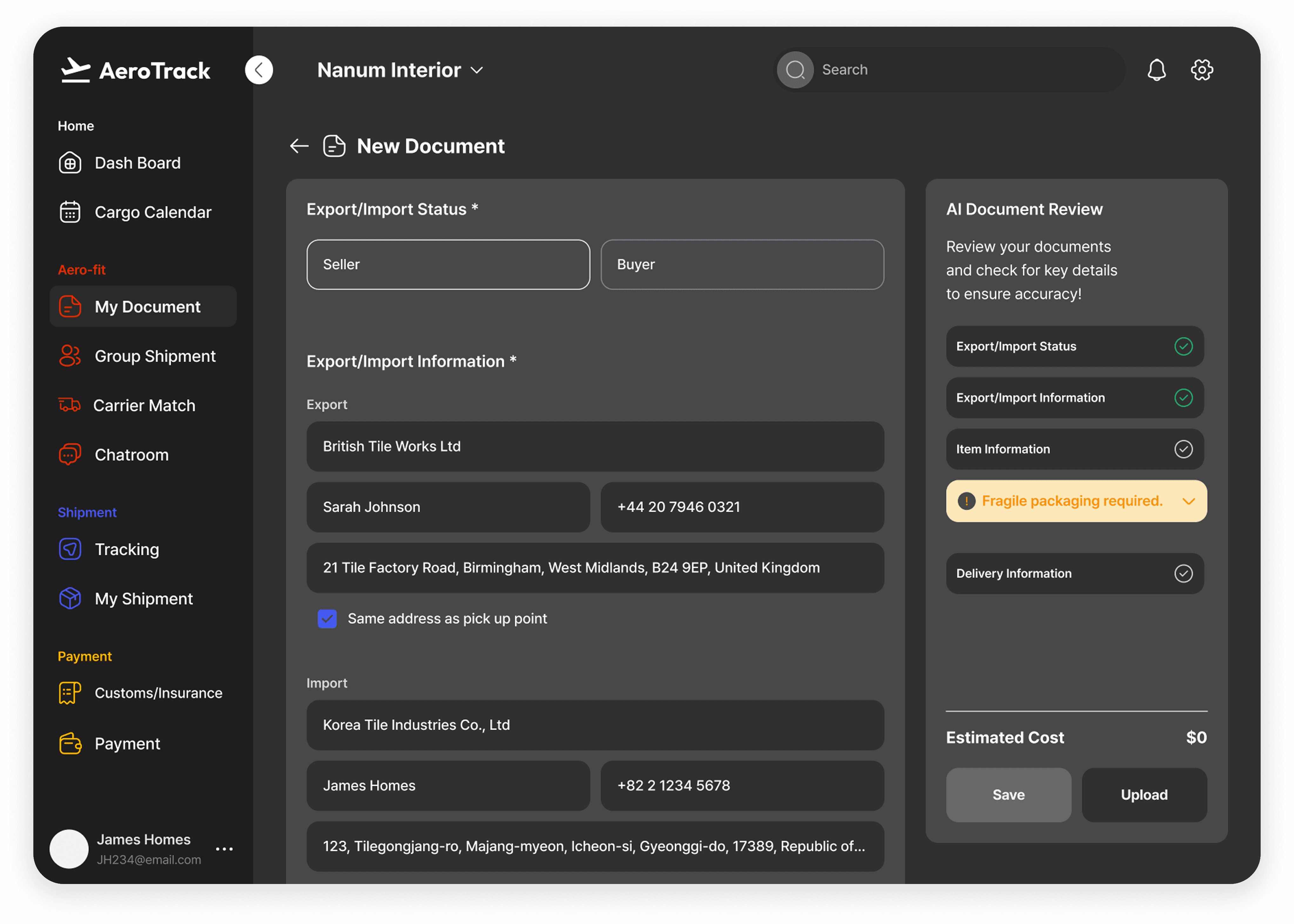
AI Document Review auto-validates against regulations, flags issues with explanations, and reduces preparation time by 40%.
03 GROUP SHIPMENT
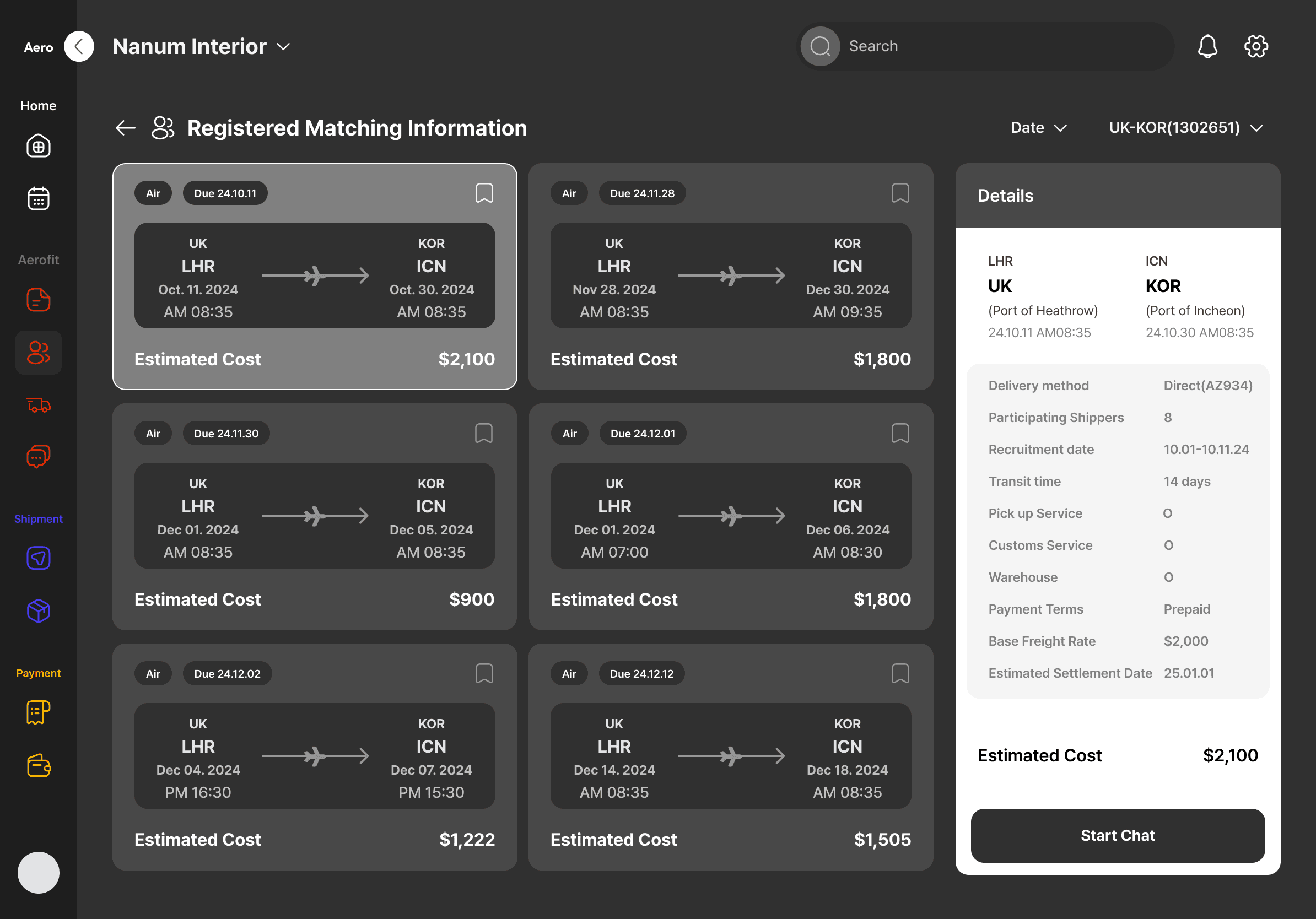
Ship together, save together.
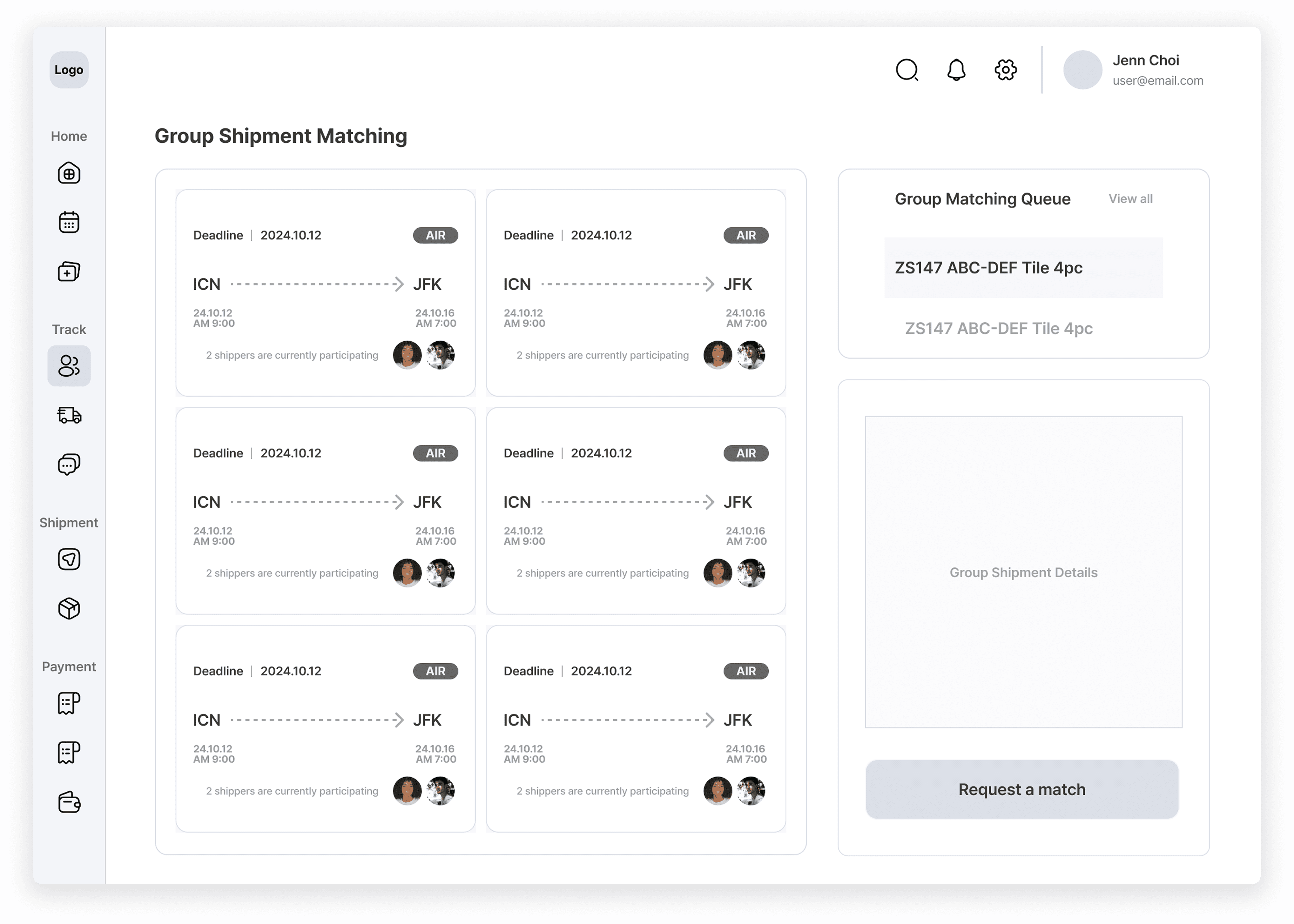
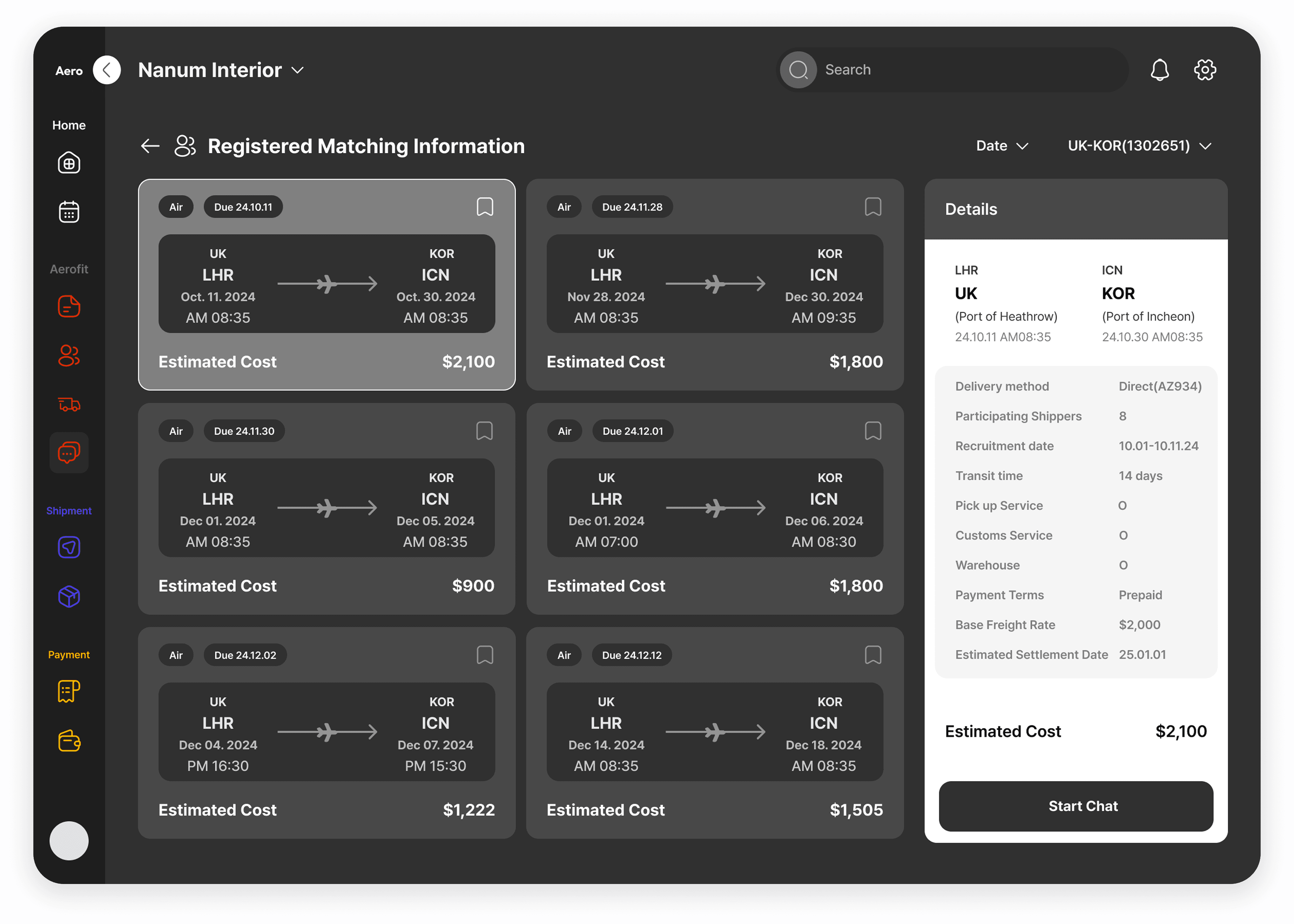
AI matches shippers with similar schedules for consolidated shipping, with clear cost comparison between individual vs group pricing.
04 TRACKING
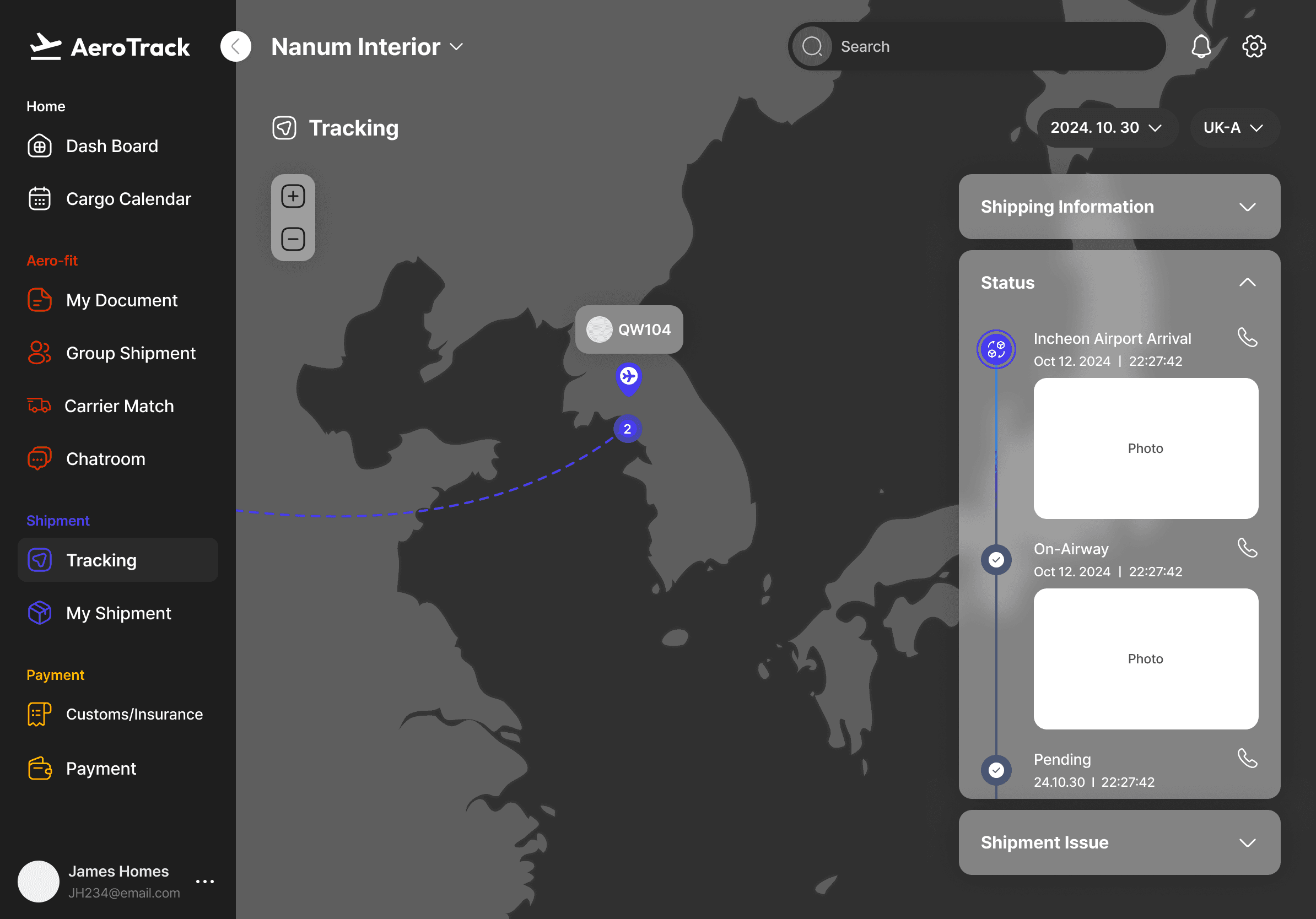
Know where your cargo is, always.
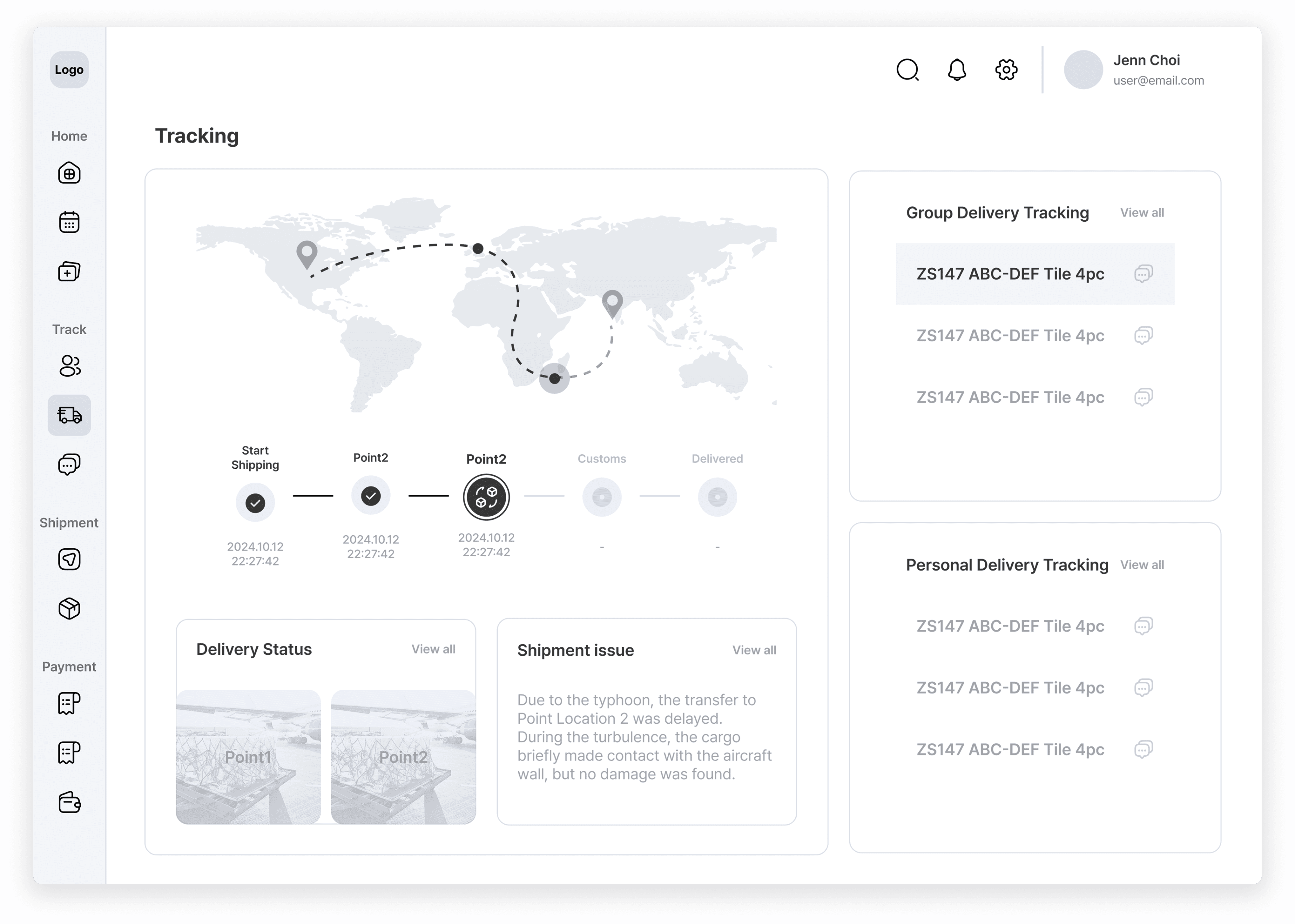
Interactive map with status timeline (Pending → On-Airway → Customs → Delivered) and real-time alerts for urgent issues.
Research: Market Context
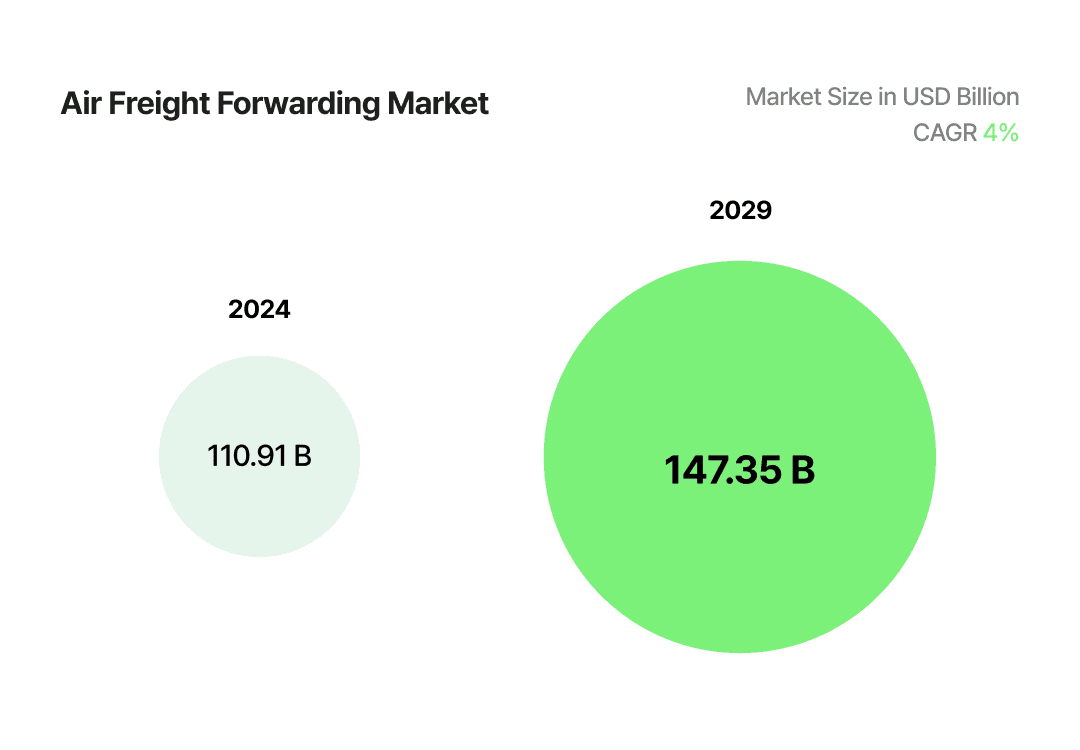
A $147B market with no solution for the little guy.
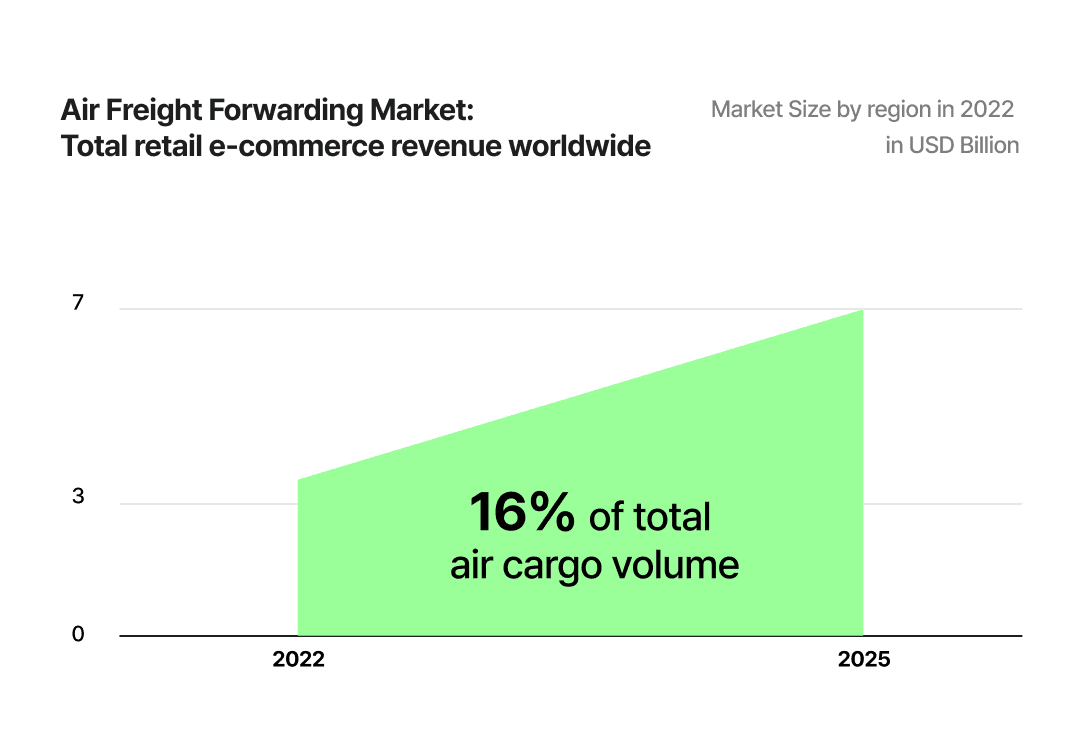
The air freight market is growing at 4% CAGR, driven by e-commerce. Yet existing tools focus on enterprise clients, leaving small importers and exporters underserved.
User Research
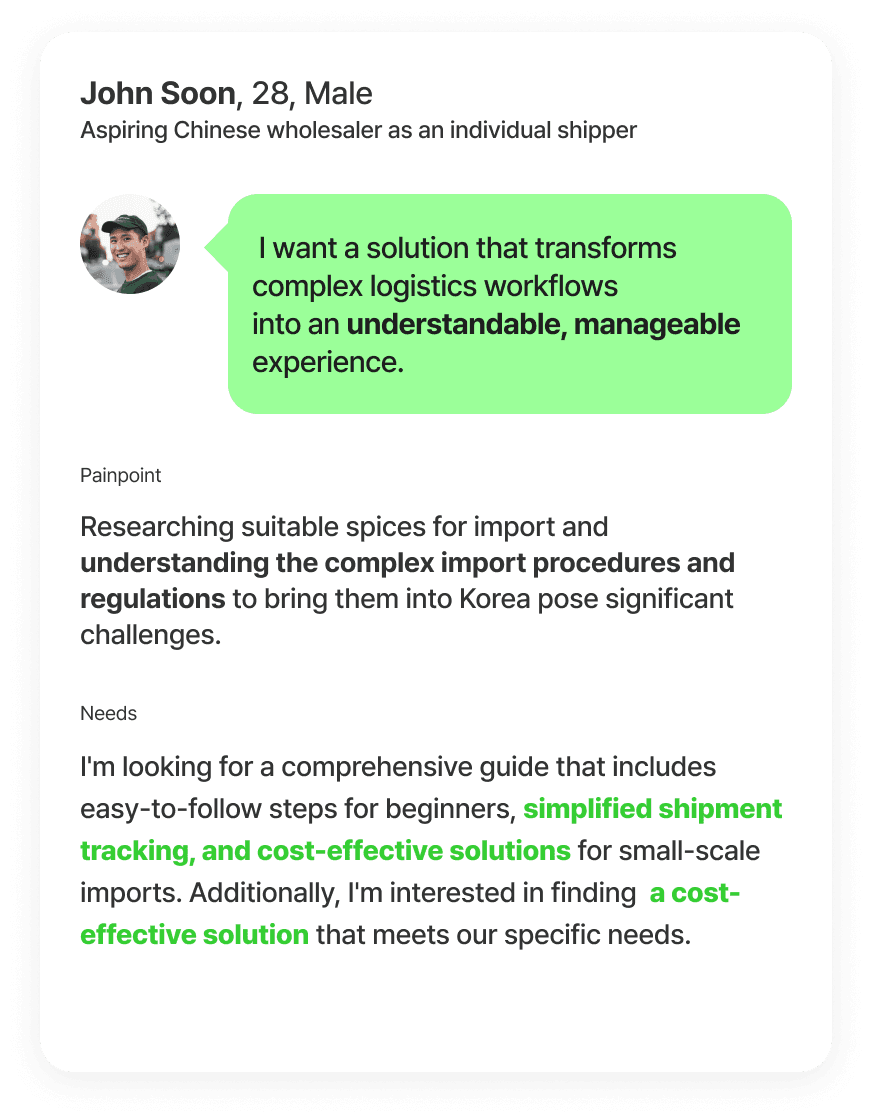
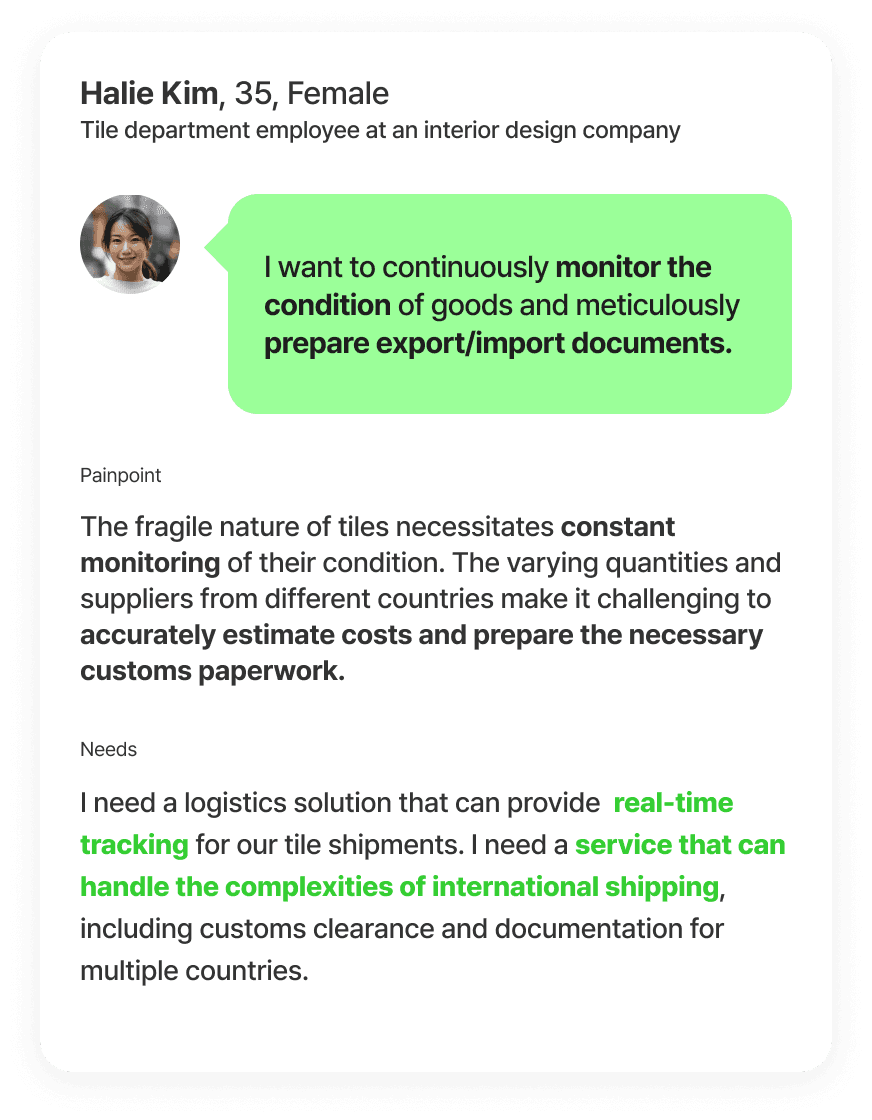
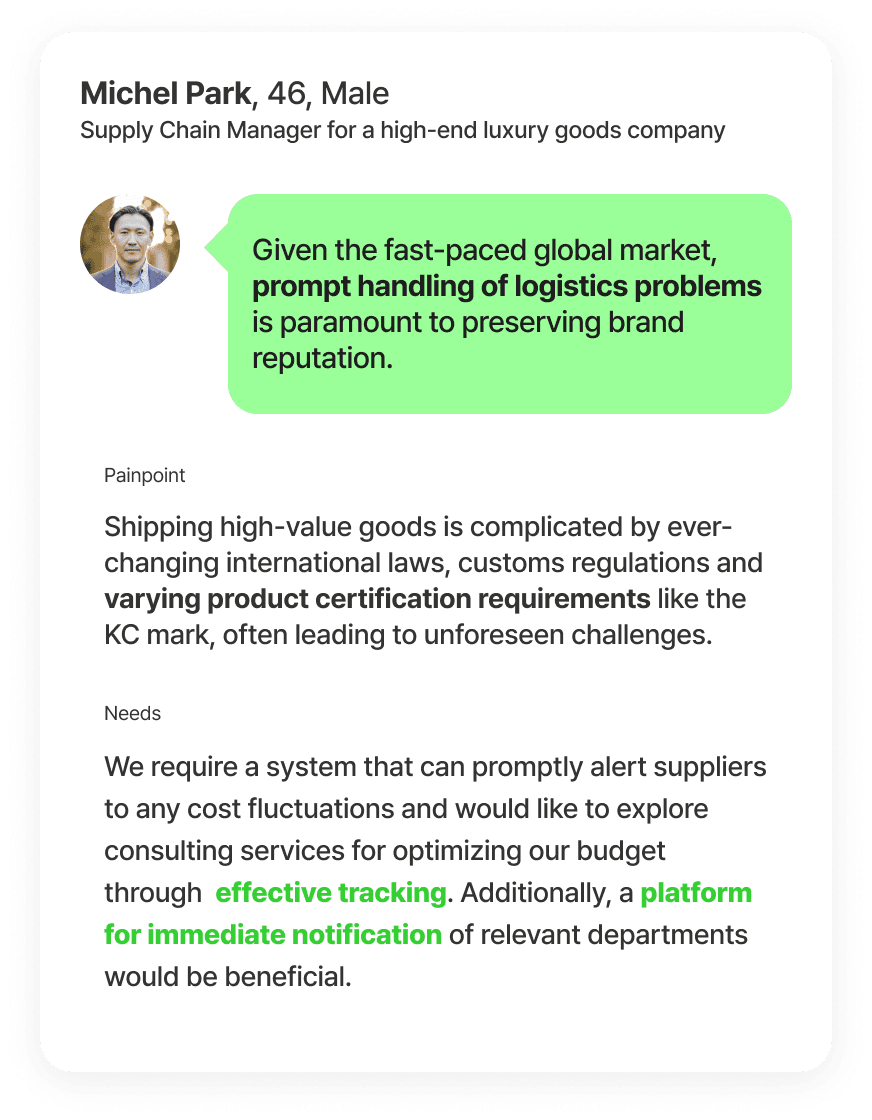
I interviewed 3 professionals to understand the pain.
KEY INSIGHTS
Documents are scattered everywhere.
→ Managing shipping documents across incompatible systems creates constant friction and errors.
B. Communication is fragmented.
→ Real-time updates with carriers, customs, and partners happen across email, phone, and separate portals.
C. No resources for emerging issues.
→ Lack of case studies and support when unexpected problems arise.
D. Empty container space = wasted money.
→ Small shippers pay for full containers they can't fill.
Ideation
How might we simplify global shipping for non-experts?
HIGH-LEVEL GOALS
- Reduce cognitive load in document creation
- Build trust through visual confirmation of shipment progress
- Enable cost savings without requiring logistics expertise
- Centralize all stakeholder communication
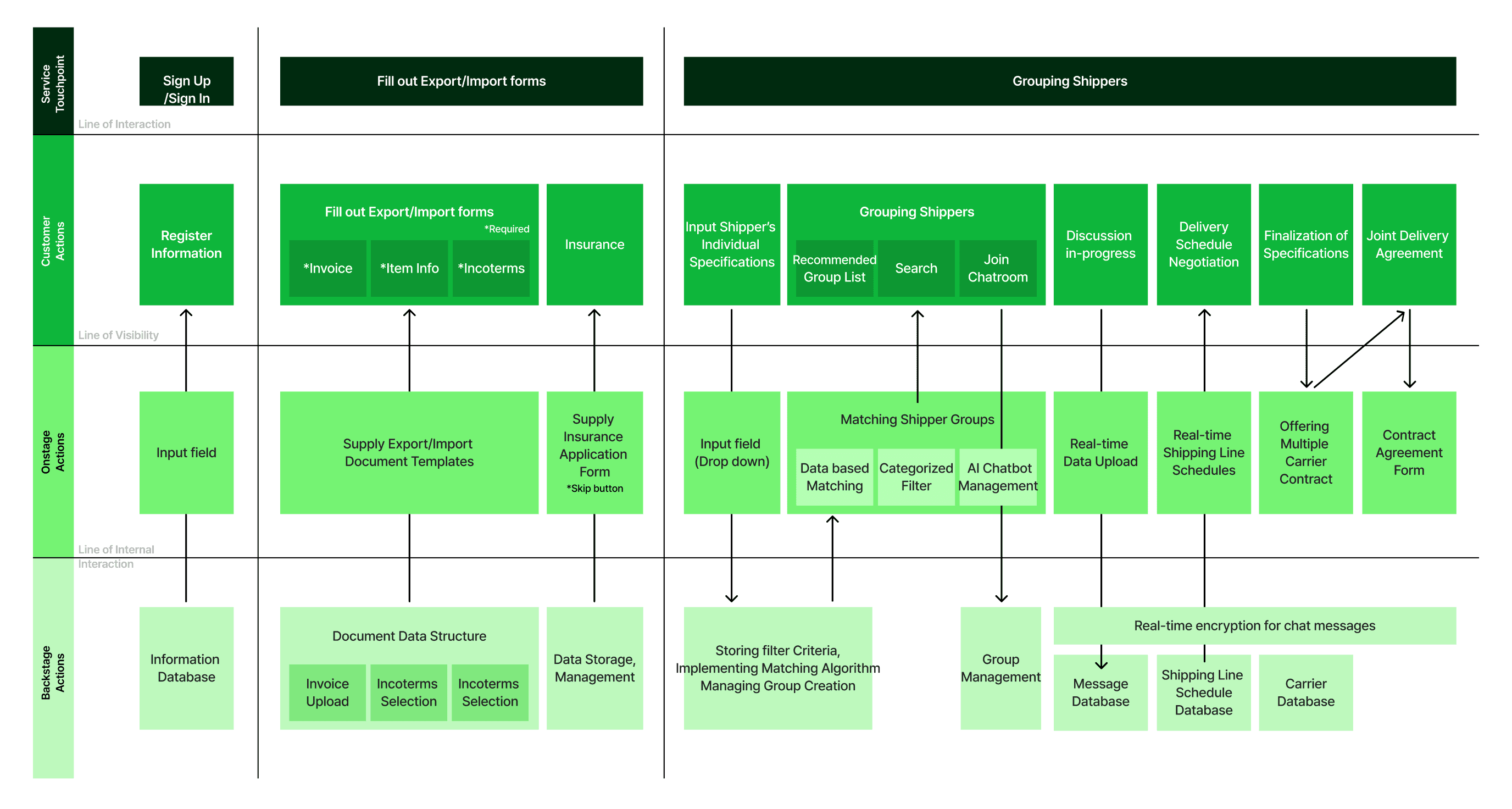
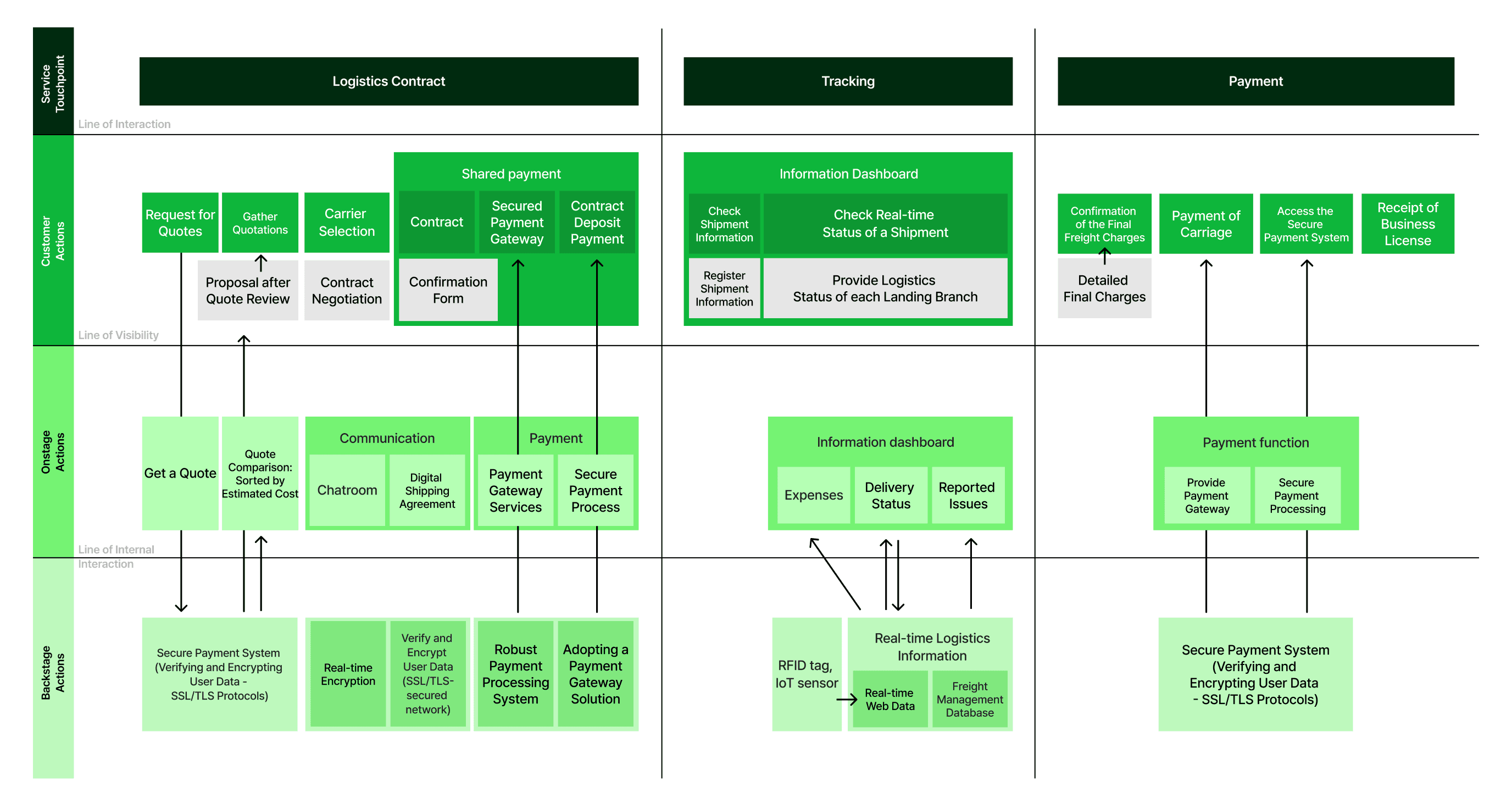
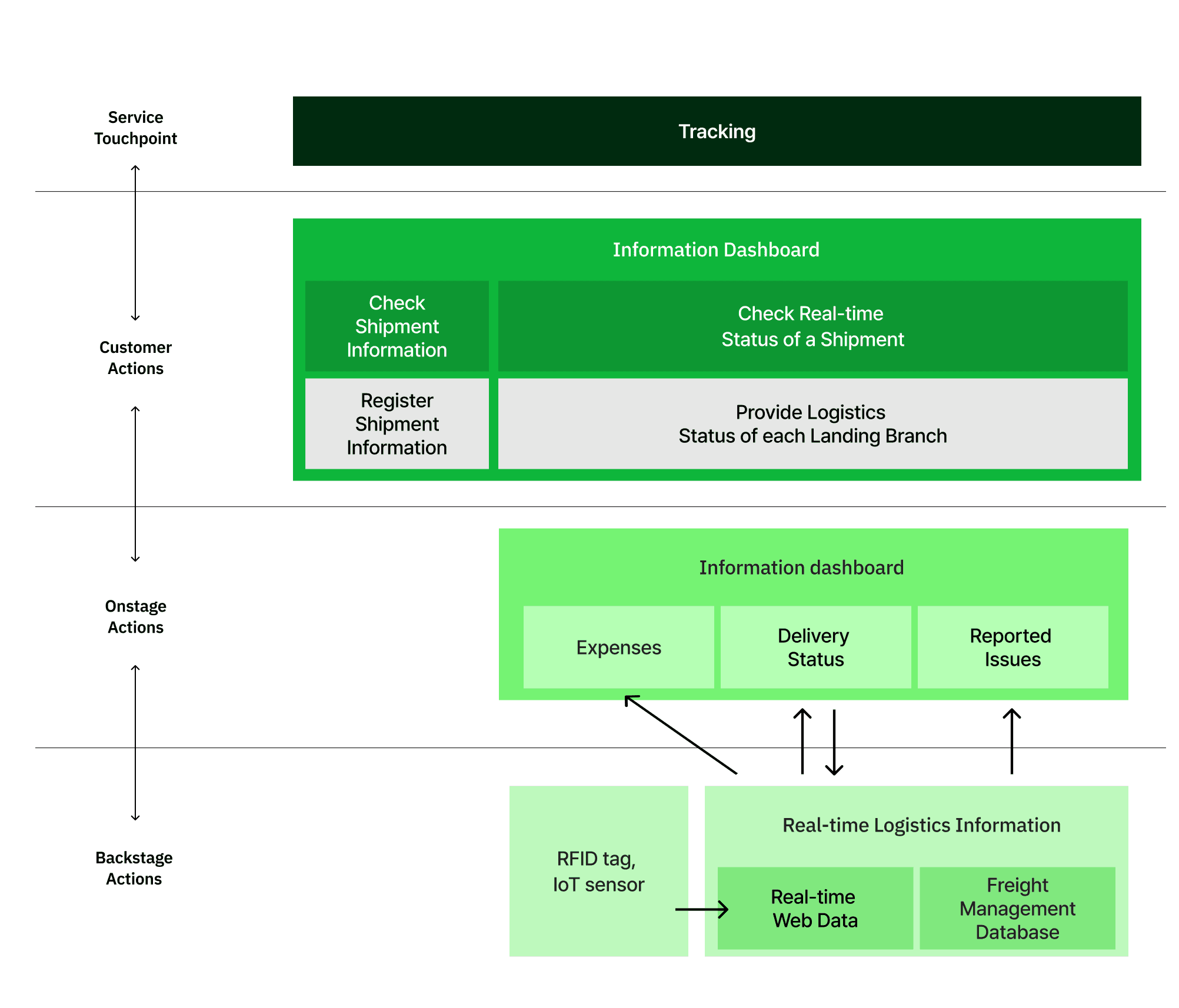
Design Process - Service Blueprint
Mapped the entire service ecosystem to identify connections between user touchpoints and internal systems.
Most journaling apps approximate insight with mood sliders and surface-level stats. I wanted something more nuanced — using AI to read between the lines and pull meaning straight from the writing itself. The aim was to reveal patterns and reflections that feel genuinely tied to who the user is.
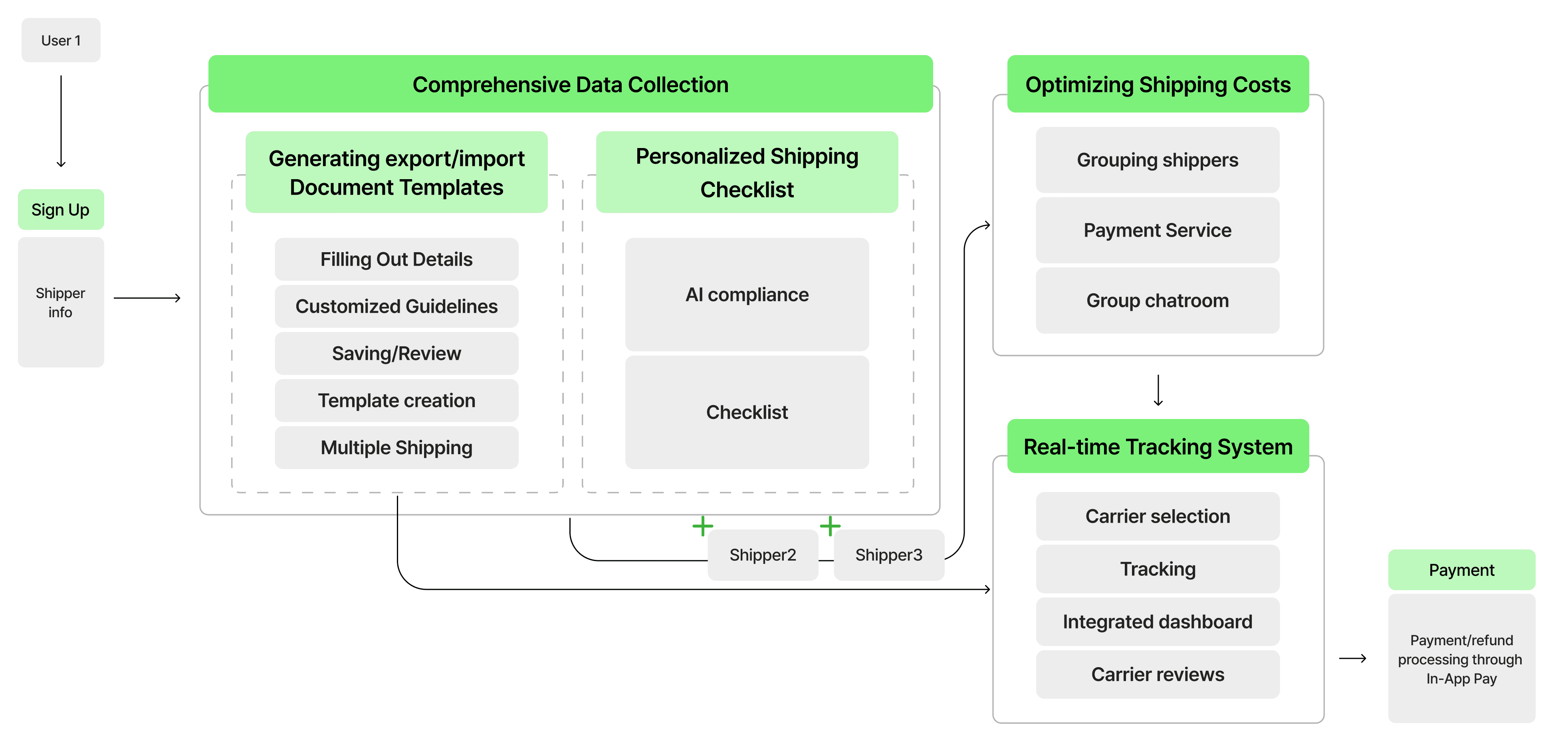
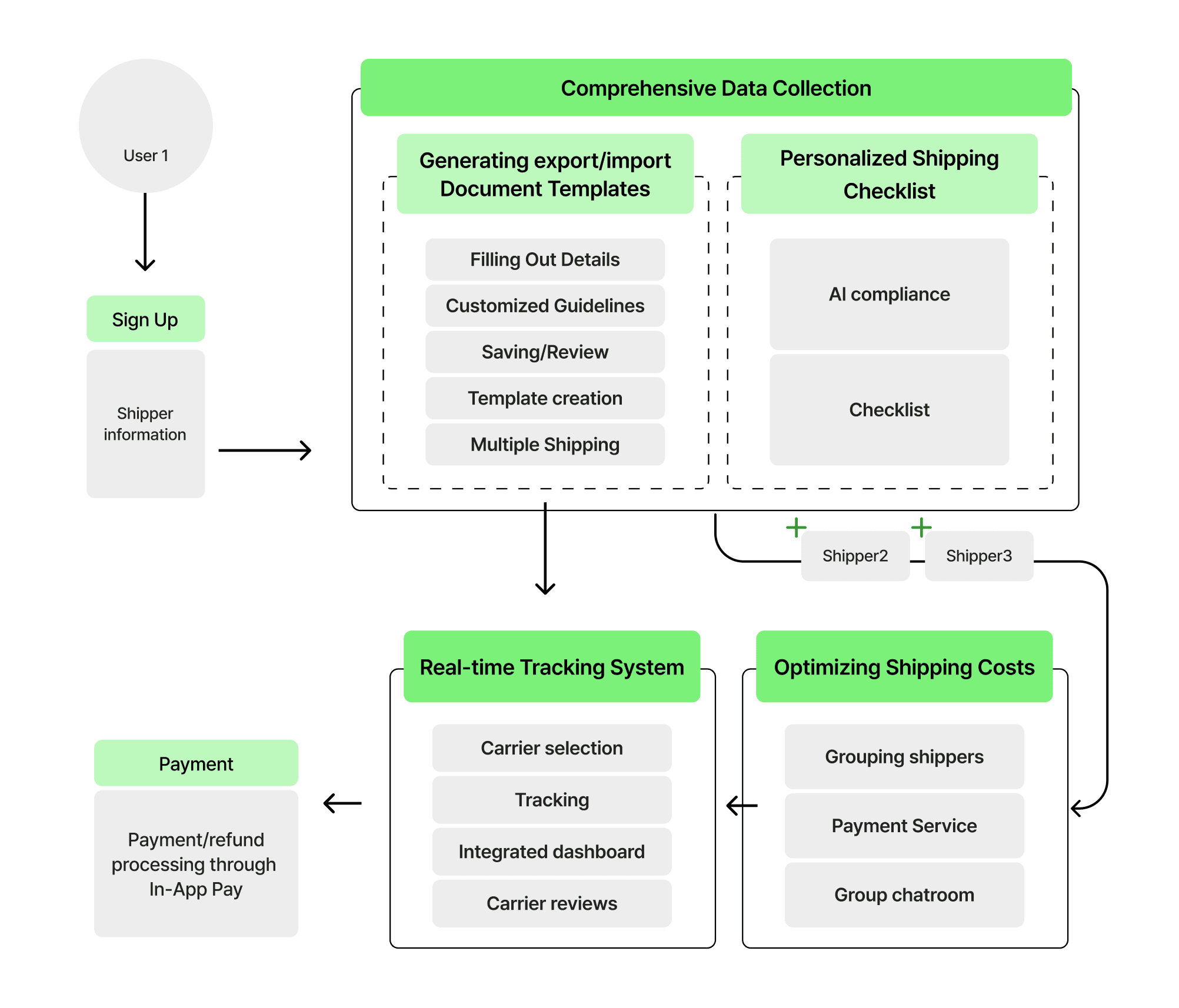
Key Flows: Sign Up → Document Creation → Group Matching → Tracking → Payment
Design Process - Information Architecture
Main Features:
1. Comprehensive Data Collection - Automated templates, AI review
2. Real-time Tracking System - Map-based UI, status alerts
3. Optimizing Shipping Costs - AI matching, group shipment
4. Integrated Communication - Chatrooms, notifications
Wireframe to Final
User Testing Feedback:
Dashboard needs clearer guidance.
→ Added step-by-step prompts and color-coded status cards
Document AI button not visible.
→ Auto-expand AI review section with visual validation checkmarks
Group shipment-shipper information not easily scannable; manual search inconvenient.
→ Added Group Matching Queue and detailed breakdown panel with all key info
Dashboard
Document
Group Shipment
Next steps
1. Test with real-world users
Conduct testing with actual carriers and customs brokers to validate the workflow in real-world conditions.
2. Go mobile-first
Explore a mobile experience for on-the-go tracking—critical for shippers who aren't always at their desks.
3. Onboarding for beginners
Develop a dedicated onboarding flow specifically for first-time international shippers.
Looking back
What I learned from Aerotrack.
Complex B2B flows require deep research
Mapping the 9-stage information flow with 10 exchanges was crucial to understanding where redundancy lived.
Iteration builds trust
Payment and tracking features needed multiple rounds to get the transparency right. Users validated the improvements across 3 testing rounds.
AI as assistant, not replacement
Users wanted AI to flag issues and suggest solutions, not make decisions for them. This shaped how we designed the Document Review feature.